canyonwalker: Message in a bottle (blogging)
This morning as I arose from bed I felt a moment of nostalgia. "It's Christmas morning," I remembered. "What presents have magically appeared under the tree?"

Of course it's been decades since I believed in Santa Claus or presents magically appearing beneath a Christmas tree. It's also been almost as many decades since I actually believed in Christmas. ....Oh, I don't deny that Christmas exists. It's a religious holiday that's important to one of the world's large religions. I'm just not a religious person.
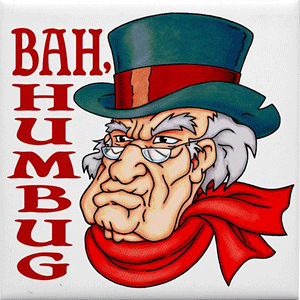
Bah, Humbug?

I've written about Christmas with the tag Bah Humbug on LiveJournal for years. Partly that's a personal inside joke, dating back years now to when I was in graduate school. The preeminent technical conference in my field had its annual submissions deadline in early January. Late December was crunch time to finish up our research and writing. That year I was working on not one, nor two, but three papers for the conference. It was mega crunch time. I recall I went to the lab sometime around 1pm on December 24th and left to go home at 7am, having pulled an all-nighter (one of many). Bah, Humbug!"I'm part of the Bah-Humbug Brigade!" I chuckled to myself as I settled down to sleep around 8 on Christmas morning.

Over the years since then I've kept Bah, Humbug as a meme to encapsulate my feeling of alienation at this time of year. Christmas is familiar to me because I grew up in a religious family celebrating it, and simultaneously foreign because I'm not longer religious and haven't celebrated it for years. At Christmastime I feel like I'm on the outside looking in through the glass with a tinge of longing— as well as a tinge of disgust at what it's become.

Of course I didn't invent the phrase Bah, Humbug. It entered our cultural lexicon with Charles Dickens's classic 1843 novel, A Christmas Carol. "Bah, humbug!" was the memorable refrain of the main character, Ebenezer Scrooge, a greedy man who scoffed at the religious significance of Christmas to anyone. He thought it was theft that his employees wanted even one day off to celebrate at home with their families.

I chuckle at saying "Bah, humbug!" but I'm not Scrooge. I don't deny the importance of Christmas to the 2-billion-plus Christians in the world... or the people who've embraced the American cultural version of Christmas as a month-long celebration of consumerism (oops, there's my tinge of disgust coming trough). I'm just not one of them. But if you are, I'm happy for you.

Most Years I Travel. This Year We're Home-bound.

Another way I'm not like Scrooge is that I don't intend to work on Christmas. ...Not since that one time years ago in grad school, anyway! 🙃

Most years I take advantage of the time off my employer provides, and the generally slow place of business at this time of year, to travel. For example, last year Hawk and I were hiking in Panama on Christmas. The year before we were touring Sydney, Australia on foot. In 2022 we visited the California desert and spent Christmas day climbing huge sand dunes, visiting an abandoned train station, driving a 4x4 trail, and exploring lava tube caves. In 2021 we were on the beach in Waikiki, Hawaii at Christmas.

In fact the last time we didn't go anywhere over Christmas was 5 years ago. That was back in the depths of the Coronavirus pandemic, before the vaccines were available to more than a handful of lucky recipients.

Indeed, what December 2020 and now have in common is that Being Sick Sucks. Oh, fortunately it's not another raging pandemic that's keeping us home this year. It's just the uncertainty around Hawk's recovery from foot surgery a few months ago. And it's just as well we didn't try to plan anything around that as she suffered a major setback a few days ago that left her unable even to walk inside the house for a few days.


canyonwalker: My old '98 M3 convertible (road trip!)
Today we headed out to the Pinnacles— Pinnacles National Park— to hike. It's a day-adventure I've been looking forward to for a while, and finally today our schedules and the weather aligned. And oh, what nice weather it was. The park had a high temperature of 78° today, warm enough to feel, well, warm but not so hot that we'd regret being out in the sun. I mean, in the summer it gets really smokin' out there, like 100+. Thus a clear day in early spring is really the perfect time to visit. Like today!

We got off to a late start today. It wasn't until around 9:30 that we left the house. I'm not too proud to admit that I had some cold feet this morning about the hike, after planning it for the past week. The problem was I slept poorly last night. I considered whether I wanted to take an "easy day" today. I'd still go hiking somewhere; but somewhere shorter and easier. Intellectually I knew that I'd be happy once I got to the Pinnacles, but it took some pushing to get through the blahs.

The drive down to the Pinnacles was enjoyable. At 9:30am on Easter Sunday there wasn't a crazy amount of traffic. I mean, all 4 lanes in both directions on US-101 through San Jose were busy, just not bumper-to-bumper at 60mph like it sometimes gets.

42 miles out from home we reach the town of Gilroy. This is the southern end of what anyone could reasonably call the Bay Area or metropolitan San Jose. Though people do commute in from farther out than this. 😳 Beyond Gilroy US 101 narrows to 2 lanes in each direction and becomes a bit of a country highway as it traverses, well, countryside into Central California.

At 48 miles we reach the San Benito County line. Yes, 48 miles and we've just left the county. Where I grew up on the East Coast I could drive 48 miles and it'd involve 3 states. Welcome to the Western US! Government boundaries aside, we're happy to note as we cross the county line that the mountains around us are all still green.

At around 60 miles we near Prunedale. The only nice thing I have to say about Prunedale is that they finally allowed Caltrans to widen and straighten US-101 through their community so it's no longer a traffic bottleneck. Now it's a pleasure driving through the short mountain range here and dropping into the Salinas Valley on the other side.

At 67 miles we roll into the north side of Salinas. We're hungry so we stop for brunch at a couple of fast food restaurants. I eat at Carl's Jr.; Hawk gets Sonic Drive-In across the street. Then we get donuts for dessert from a nearby shop.

While in Salinas I have a... wardrobe malfunction. A seam ripped in my hiking shorts. I briefly consider a) just hiking for the day with a hole in my pants or b) just going home because I'm so pissed about it. Hawk points out we're literally right in front of a Wal-Mart, and almost certainly they have something inside I can buy and wear. I grumble about Wal-Mart fashion before, to my surprise, I find not one but three items of clothes to buy there!

South of Salinas 101 is a chill road. It's straight and level as it traverses farmland in the agricultural Salinas Valley. There's a Steinbeck museum here. He was born in Salinas and used it as inspiration for many of the settings in his books, including it being featuring literally in his classic, The Grapes of Wrath. I've read Salinas people are so pleased about it they've held book burnings in his honor.

At 97 miles we're finally in Soledad. This small town is where we turn off the highway and head up into the rugged hills of the Gabilan Mountains. You probably haven't heard of the Gabilan Mountains. But one thing interesting about them is they're so remote they're crossed than fewer roads than the Sierra Nevada range with its 14,000' peaks. And even state highway 146, which leads to the park, doesn't cross these mountains. It stops halfway across. It stops halfway across, in the park, then picks up again on the other side! The only way across Pinnacles National Park is on foot. That's how you know you're in a hard-core hiking park.

canyonwalker: wiseguy (Default)
Yesterday Hawk sold most of her comicbook collection. For years it has been occuping a few dozen long boxes in our "Hobbit Hole" behind the garage. We don't have an exact before picture of the collection, but here's a photo from when were were doing some cleaning in the Hobbit Hole a few years ago:

Cleaning up in the crawl space. Nov 2019.

The longboxes were piled 3 high (and I think 9 across) on the left side in the picture.

Hawk sold just over 6,000 issues. They filled 23 longboxes.

Hawk sold a lot of her comic collection (Jul 2024)

A dealer came to buy them on Monday.

And here's the money shot:

6,000 comics became a stack of Benjamins (Jul 2024)

Hawk now has a stack of Benjamins instead of a wall of boxes in the Hobbit Hole. ...Well, she still has a small wall of boxes. She kept about 1,200 issues of her collection. They fill 9 shortboxes.

canyonwalker: Planes, Trains, and Automobiles. Travel! (planes trains and automobiles)
New Zealand Travelog #43
Back home - Mon, 22 Apr 2024, 8am

We're back home from New Zealand now. ...Well, when "now" was Monday morning; it's taken me until Tuesday night to post this blog.

Our flight landed at SFO a bit early, around 6:30am. The journey had been nearly 12 hours in economy class, albeit United's Economy Plus, with a bit more legroom. This time there was no empty middle seat between Hawk and me. And the person between us was not exactly small.

I got zero sleep on the flight, absolutely none. Partly that was due to the cramped seating, partly it was the timing. 6:30am San Francisco time is 1:30am New Zealand time. Staying up the whole flight was just like staying up late. Except now it's Monday morning here, and I've got a whole day ahead of me. Yeah, I think I'll be crashing early tonight.

One curiosity of flights back from Asia is that they arrive before they depart. Our flight left Auckland Monday the 22nd at 1:50pm and arrived San Francisco Monday the 22nd at 6:35am. That's an effect of crossing the International Date Line. It's (spoiler alert) part of a plot twist in the classic Jules Verne novel I read as a child, Around the World in Eighty Days. Or, as I like to call it, the second closest I've ever come to time travel.

Thankfully things moved swiftly once we were off the plane at SFO. US immigration and customs move quickly now with Global Entry. It took them several years to get things properly automated, and the cost has been surely billions of dollars plus all our privacy from the government (the system uses biometric identification), but at least now it works. And the Uber ride home was pretty quick, even though we hit the early end of rush hour traffic. We walked through our own front door at 7:45am. And while I could technically have made today a workday, I very intentionally took it off. Today's a day to unwind from travel and get back on the local timezone! And likely also take a nap to make up for being up all night.

canyonwalker: Planes, Trains, and Automobiles. Travel! (planes trains and automobiles)
New Zealand Travelog #25
WLG Airport - Mon, 15 Apr 2024, 1pm

This morning we flew out from Queenstown. And wouldn't you know it, the skies were finally clear. The whole fucking week has been clouds and rain, and now I see this from the top of the stairs boarding the jet:

Boarding in Queenstown like the Queen (Apr 2024)

Oh, and I finally saw 12,000' Mt. Cook today, too. Another thing that after two days of being clouded in, is finally visible today.

I finally saw Mt. Cook through the clouds! From my departing flight. (Apr 2024)

Unfortunately I only get to see it from the window of the aircraft as we fly over at 36,000', and even then only by leaning over my rowmate in the window seat (after asking politely!) to snap a picture.

Then, at Wellington Airport, I found that instead of flying an Airbus A320, I could have flown a giant eagle.

Giant eagle from Lord of the Rings at Wellington, NZ airport (Apr 2024)

Yeah, there are a bunch of places in New Zealand cashing in on Lord of the Rings lore. The location sets were famously filmed in this country. I'm pretty sure they didn't use a 21st century airport as a location, though. But I guess if you're going to have people flying giant eagles around, the airport makes as much sense as a birds-of-prey center, and these birds might freak out the actual birds of prey.

Giant eagle - with Gandalf - from Lord of the Rings at Wellington, NZ airport (Apr 2024)

Seeing Gandalf atop this giant eagle in the airport all I can think of now is his "You would not part an old man with his walking stick" line in the hall of Theoden with Wormwood's goons replaced by TSA agents.

canyonwalker: Illustration from The World of Robert Jordan's Wheel of Time (the wheel of time)
Season 2 Episode 2 of Wheel of Time, "Strangers and Friends", continues with tracking multiple storylines where the main protagonists have been split up. That aspect of the story is in keeping with the books— the story often flips back and forth between multiple viewpoint characters in different places from chapter to chapter or even within a chapter— though the TV writers continue diverging from the books on who's with whom and doing what.

Here are Five Things from this episode:

1. Mat's in the Tower

Instead of being out on the hunt with Rand and Perrin, Mat's in the Tower... and it's not good for him. He's being held prisoner by Liandrin Sedai. Her motives with him are unclear at this point, though folks who've read even a few books ahead from this point know that Liandrin is Spoiler from later in the books )

So Liandrin is basically sitting on Mat until further instructions arrive. She's not literally sitting on him, though. She only checks on him maybe twice a day. And she follows a predictable schedule, which Mat has figured out. He uses the long gaps in her attention to try digging his way out, Shawshank Redemption style.

2. Min's in the Tower, Too

Mat's digging doesn't lead to his escape. It only leads him to another prison cell. Mat's next door neighbor is... Min Farshaw! Mat and Min know each other by this point in the books and are friends and allies. With how the TV series has switched around subplots and character threads, though, here they're strangers. (TV-Min met the other protagonists in S1E7, which was after TV-Mat had already bugged out and ditched the group.) But they find quick camaraderie through their shared imprisonment. It's like they were fated to meet regardless of what Liandrin Sedai or a team of TV writers want. Mat's a bloody ta'veren!

3. Rand's in Cairhien... with Selene. Also, "Randland"?

Rand, on his own (unlike in the books at this point), pops up in Cairhien, one of the biggest cities in Randland. ...Wait, they don't actually call it Randland in the TV series. We book fans gave it that name countless years ago because the characters in the story didn't have a name for the land where they lived. They just call it "the land" or something like that. Like, how can all these people not have a collective demonym for where they live? Like, not even an old-language version of "the land". Just the land. TV writers fixed that by having standardizing on names like The Westlands.

So anyway, Rand's in Cairhien. It's one of the biggest cities in The Westlands. He's shacking up with this mysterious chick named Selene who's kind of clingy but says really stupid things about how she always thinks of her ex when she's having sex with Rand. Seriously, she says that. I'm like, "Dude...." Rand's clearly young, horny, and desperate, because this chick's totally damaged goods and he's not even hearing it when she's saying the quiet part out loud.

Of course, book readers who've gotten through at least the end of Book 2 know that Selene is Spoiler from book 2 ) Only many books later did we readers see that she was also vain and deluded and an emotional dumpster fire. That part the TV writers seem to have brought to the front.

4. Rand would Kill for a Promotion... to Senior Bedpan Changer

Rand isn't just boning Selene in Cairhien. That desperate shrew is actually charging him for a room at her room house. Really, she's so desperate she should be paying him. So he works. He's got a job as an orderly at an insane asylum. Yup, here's the Dragon Reborn, changing bedpans while addled old farts shake and scream about things that aren't real.

And Rand is such a genial bedpan changer. While the other orderlies enjoy making fun of their charges when their backs are turned, Rand befriends a mentally wounded old soldier. Apparently he's learning sword forms from the guy, who attained the rank of Blademaster in the Aiel War 20 years earlier. But Rand has his eye on an even better bedpan filler to learn from....

Spoiler from this episode )

5. The Seanchan Arrive... On Camera

The Seanchan are major players in the story. They're the people from the land far to the west. Gee, maybe that's why people in the books just called their continent "the land" instead of naming it The Westlands... because there's something west of the Westlands! Their attack on the Westlands was shown briefly in a tag ending at the end of season 1. Here their invasion is brought on-camera— by which I mean it's witnessed by main characters instead of being something that happens in the background and gets related clumsily.


Spoiler from this episode )

This part is off script from the books— like so much of the rest of the TV series— but here it seems like it will be a real improvement rather than a "WTF are they doing?" thing. Moving more of the Seanchan invasion on-camera is an improvement. It means we viewers don't have to piece it together from various small flashbacks scattered across the next 3,000 pages.


canyonwalker: Illustration from The World of Robert Jordan's Wheel of Time (the wheel of time)
Here are a few more thoughts about S2E1 of the Wheel of Time series streaming on Amazon Prime. The episode is entitled "A Taste of Solitude", not "The Darkfriend Social" like you might have thought from my previous blog. That's just a fun sobriquet that a friend of mine created over 30 years ago that's since become common in the fandom! Following that the bulk of the episode aligns to its name, showing how the main characters are split up and dealing with things on their own. Here are Five Things:

1. Moiraine Labors Without the One Power

In the next scene we see Moiraine at Tifan's Well, a remote villa owned by fellow Aes Sedai Verin Mathwin. She's laboring to carry water drawn from a well up the hill to the manor. She's doing this as part of her... exercises, for lack of a better term... to keep herself focused while cut off from the One Power.

Yes, Moiraine's still cut off— Ishamael did that to her in S1E8— even though it's apparently been several months now. I think the writers intend this as Moiraine being Stilled, as it was called in the books, rather than merely temporarily shielded. In the books both things can happen, though being Stilled is far more powerful and punishing. It seems the show writers do not differentiate the two.

Of course, in terms of divergence from the books, the show writers also made up Moiraine being exiled from the White Tower earlier in S1 and being out here with Verin in S2. In the books Verin was in the Tower at this point. The show writers are definitely writing their own story at this point.

As I explained in my previous blog, that's not bad per se. It is a bit disorienting to us viewers familiar with the books. But ultimately this show will have to stand on its own as good TV. I think they're making good TV here by pushing Moiraine into the background, showing what a plotter she still is, and leaving the younger folks from the Two Rivers to have to fend more for themselves. That part at least is true to the spirit of the books.

2. Novices in the Tower

The third major scene shows Egwene and Nynaeve studying as Novices in the Tower. We see the degradation of the scut work they're given (novices scrub plates and pots in the kitchen) and the harsh way the Aes Sedai frame their lessons in channeling the One Power. Each of the girls is given a glass of dirty water and told they must drink it— after passing it through a magic weave they're being taught to purify it. The harshness is "Learn this thing fast or you swallow mud," which the teacher is very direct about.

This is an enjoyably vivid way of showing these two aspects of Egwene's and Nynaeve's life in the tower compared to the page, and pages, and pages of, frankly, dull prose in the books describing it. That's often the case with visual media, though. Showrunners can show a scene that conveys in 2 minutes what 100 pages struggle to say. Oh, and Nynaeve's stubbornness and difficulty channeling are beautifully shown in a quick scene where Tiny spoiler )

There's still the books-vs-TV issue that Nynaeve is a novice. In the books she was admitted as Accepted right away because of her strength in the power. I'm not sure this really matters. Frankly I like it better with the two women from the Two Rivers continuing to bond as there was time for little of that character development in season 1.

3. Loial's Not Dead!

The next arc of the episode follows Perrin as the viewpoint character. He's traveling with a band of Shienaran soldiers pursuing the dastardly darkfriend Padan Fain. Fain snuck into Fal Dara (in Shienar), killed a bunch of people, and stole the Horn of Valere. (That was S1E8 in the TV series but early 2nd book.) The horn is a magical artifact that summons heroes of legend and is storied to be important in winning the looming battle against the Dark One.

The TV writers change up the plotlines here. Mat and Rand are not with Perrin here. Nor is Verin; she's off at her private ranch with Moiraine, as noted above. In the books they're on this mission together. But one person I was surprised to see here is Loial— he's not dead!

The showrunners left it vague at the end of S1 whether Loial had died when had Padan Fain stabbed him (and Uno, and others) with a cursed dagger in Fal Dara. I assumed they meant to kill off Loial because they'd obviously spent so little money on FX for portraying him as an 8 to 9 foot tall quasi-human with tufted ears and hands. I mean, it only makes sense to cheap out so badly with a low-budget Loial in S1E5 if they've rewritten him as a throw-away minor character going who only has a few brief appearances.

4. Is that Idris Elba?

Another juggle in "Who's where, and when?" between books and TV involves the Shienarans' new tracker. In the books it's a long-term minor character, Hurin. In the TV series there's mumbling between soldier extras about "some new tracker". In a big reveal we see it's Elyas Machera— an interesting minor character from book 1 who was sadly cut out of season 1 to condense the story. While he's minor in the story as a whole he's actually really important to helping develop Perrin's character, so I'm glad they worked him in here.

For those not familiar with the books— and, okay, for us fans of the books, too— part of what makes this is a big reveal is probably, "Wait, is that Idris Elba?!" Haha, no, it's actor Gary Beadle. The showrunners aren't willing to spend the kind of money it would take to cast a big-screen star like Elba, especially for a minor character. Though Beadle's makeup and costuming with glowing, golden eyes sure recall Elba's portrayal of Heimdall in various Marvel movies.

5. Ingtar Admonishes Perrin: "They had a reason"

As Perrin and the Shienarans survey a slaughter scene left behind by Padan Fain and his band of darkfriends and evil monsters, Perrin frets about how he may not be able to contain his rage when they catch the darkfriends.

The group's leader, Ingtar, cautions Perrin about the perils of revenge as a mindset. He explains that if Shienarans sought revenge for all wrongs, there'd be no Shienarans left. He notes that people who do seemingly bad things must've had some reason to do what they did, and admonishes Perrin to pause to consider what that reason might be before assuming the worst and killing them for retribution.

The first half of Ingtar's lesson is standard fare for speeches about revenge, but the second half seems a bit off. Knowing what's revealed later in the books makes it way off. Spoiler from later in the second book )
canyonwalker: Illustration from The World of Robert Jordan's Wheel of Time (the wheel of time)
Just recently Hawk and I resumed watching the Wheel of Time TV series with season 2. Here are my thoughts as we watched S2E1, "A Taste of Solitude". Originally I started structuring this as Five Things but then realized it was getting way too long, with 4-5 paragraphs per Thing. Thus I'm splitting it up into a few pieces. The first one is the infamous Darkfriend Social.

The episode's cold open portrays the scene from the prologue of The Great Hunt, the second book of the series. That tracks with season 1 lining up with the first book of the series. At a mysterious location a dozen or so powerful darkfriends gather secretly to be given instructions by Ishamael, the most powerful of the Forsaken and the Dark One's right hand.

As a note, the term darkfriend comes directly from the story. It's an epithet characters across multiple cultures use to describe those who secretly serve the Dark One, the evil power trying to destroy the world. Calling this scene the “Darkfriend Social”, though, was coined by a net.friend of mine in 1993. Yeah, that's a long time ago now! I'm glad to see it's caught on pretty widely across fandom.

In portraying this scene the TV show writers once again make a change from the books I don't entirely like. They change the viewpoint character.

Scene Details (click to open) )

This is one of those situations where the change seems good for the short term, making the TV scene emotionally powerful in the moment, but bad for the story in the long term, depriving us viewers of important foreshadowing that's essentially buried in the scene.

canyonwalker: Illustration from The World of Robert Jordan's Wheel of Time (the wheel of time)
Recently Hawk and I started watching Season 2 of The Wheel of Time. It's streaming on Amazon Prime. As I write this we've watched the first two episodes already. I'm not going to write about them, though, but the series in general up to the start of S2.

Season 2 is not new, per se. Its 8 episodes of dropped 4-5 months ago (September and October 2023). If I'm a a bit late to the party it's because I haven't been sure I care about this party.

Waning interest in The Wheel of Time is, ironically, not a new thing. It's also fittingly not a new thing, as "There are neither beginnings nor endings to the Wheel of Time," as all WoT fans know, and the Pattern repeats itself. "What was once will soon come again." I lost interest in the books halfway through the series years ago, even after the first third of the series had been a defining part of my life for years. It's how I met my wife, among other things. But as "The Wheel of Time turns [...] legend fades to myth, and even myth is forgotten by the time the age that gave birth to it comes again."

A Long Gap

Part of the reason my interest waned in watching Season 2 is the long gap between seasons. The Season 1 finale dropped December 24, 2021. The Season 2 premier dropped over 20 months later, on September 1, 2023. "When's the next one going to come out?" is something we fans of the books agonized over years ago, particularly as the author's pace of writing and publication slowed down. That was one of the reasons I ultimately lost interest in the books halfway through.

With the streaming series there's an external reason, i.e., one that's not just about the writers: Covid shut them down. The global Coronavirus pandemic hit toward the end of production of the first season. It mucked with timetables for preproduction and production of Season 2.

Slower, Faster

Gaps between books was only part of the reason I lost interest in the written series, and it was probably only the secondary reason. The main reason was the sluggish pacing of the story. Being brief was certainly something author Robert Jordan was never accused of. Indeed, among F&SF fans who didn't like his books back in the day, "They're too slow" was basically the entire criticism. Across the first few books I found in the wordiness a lot of richness in developing the characters and the world. By the 5th book, though, it just became ponderous. By the 6th it was painful. After the 7th I found so little happening in the books that, combined with the slowing pacing of publication, I completely lost interest in the series.

Slowness is absolutely not a problem in the streaming version of Wheel of Time. As befits the dictates of the medium, the showrunners are practically racing through the story. Eight episodes of S1 roughly mirrored the first book in the series, The Eye of the World. S2 looks like it will track more or less to book 2, The Great Hunt, in its 8 episodes. Each of these are 600+ page novels so, yeah, a lot has to be condensed. And honestly that's a good thing.

Off Script from the Books. A Refreshed Perspective.

"It's too slow" isn't why I lost interest in the streaming adaptation between seasons. The fact of how widely it breaks from the books in ways big and small is. Now, the gap in my interest isn't at the level of a death sentence, like it was for me with the books years ago, or like it seems to be for some fans of the books in rage-quitting the streaming series after S1. I knew I'd watch it eventually. I just didn't care when. Finally the time came on a weekend when the weather sucks and I was bored nearly to tears.

"Books are books and TV is TV." Believe me, I understand that. Major changes have to be made in adapting a huge and sprawling (many would say too sprawling) series of novels. But as I enumerated across my many blogs from watching S1, the writers of the streaming version have diverged from the books in too many key areas. It's not just cutting out side plots and minor characters— which are generally good changes to make— but changing major plots, major characters, major motivations, and even changing the rules of how the universe works (which books author Robert Jordan was very meticulous about).

My pique about the breadth of these changes softened up a bit by watching Game of Thrones in the long gap between seasons. There, my situation with books-vs-TV familiarity was reversed. I haven't read GoT. I found the streaming series fairly enjoyable for what it was without being tripped up by what differed from the books. I did read about some of those differences in fan wikis about the show... and while some fans were evidently really stuck on the changes made, I found them to be positive changes for the most part.

I applied that perspective in hindsight to S1 of WoT. Were the changes all that bad? Most of them were not— but then again, I was tolerant of those changes from the start. A few things still rub me the wrong way, though. Mat ran off for no reason (truth: there was a problem with the actor and he had to be recast). Rand asked Moiraine to pretend he's dead and ran off. Perrin had a wife and killed her. Oh, and the whole arc of series 1/book 1 changed from "Rand learns he's a child of prophecy and struggles to start to come to grips with his destiny" to "The DrAgOn ReBoRn CoULd bE AnYbOdY!1!" with the writers actively concealing some things about Rand to spring it on viewers as a reveal in the season finale.

canyonwalker: Mr. Moneybags enjoys his wealth (money)
I don't know if it's just my newsfeed, but investment self-help author Robert Kiyosaki has been in the news a lot lately. It seems like every week recently I've seen another article or two about him. Kiyosaki is author of the classic financial literacy book, Rich Dad, Poor Dad.

I picked up a copy of the book in the 2010s and devoured it. I kinda wish I'd grabbed a copy in the late 90s (it was first published in 1997) to read years earlier as it would've helped crystalize some of my understanding of finances and building wealth that I'd had to figured out on my own. But it wasn't a big loss reading it later as first, like I just said, I did figure it out on my own; and second, not all of Kiyosaki's advice was actually sound.

Robert Kiyosaki's 1997 classic "Rich Dad, Poor Dad" (cover of my 1998 edition paperback shown)A Classic Tale of Two Archetypes

Kiyosaki's Rich Dad, Poor Dad is part financial literacy guide, part motivational self-help book, and part biography/autobiography. With the subtitle "What The Rich Teach Their Kids About Money-— That The Poor & The Middle Class Do Not!" Kiyosaki weaves in stories about his own father vs. a man who lived nearby.

Kiyosaki's dad, who earned numerous college degrees and worked his way up to the highest echelons of his career in education, was actually the poor dad. For all his degrees and professional accolades, he never built lasting wealth for himself or his family. And when he was dismissed from his job for (literally) political reasons he had few employment alternatives. Meanwhile the author's neighbor, a man with limited formal education, built a business in landscaping and property management. He lived modestly and retired wealthy— mainly because the business he built and the assets he purchased continued to provide him income even once he stopped working full time.

I'd summarize the lessons in Kiyosaki's book as these— and keep in mind I'm going on memory from ten-ish years ago:

  1. Understand the difference between assets and liabilites— and invest in assets.

  2. You're very unlikely to become rich solely by working for someone else. You've got to build something you own, whether it's a business or a portfolio of assets, that generates positive cash flow— and keep investing part of that cash flow to grow it.

  3. Buying real estate and renting it out is the classic way to do this. Other forms of investment are suspect, while real estate always works. There are no exceptions. It works in all markets.


Problems with Kiyosaki's Advice

You can probably tell from the way I'ved worded the third point, above, that I saw problems with Kiyosaki's advice. The main one was his fixation on real estate investing as the only path to financial success. Real estate isn't a bad category of investment, generally speaking, but it's certainly not the only one worth considering. And in certain markets it's way harder to invest in— and way slower to deliver returns— than in others.

My real estate market in Silicon Valley is/was one of those areas that doesn't work like Kiyosaki insists. The challenge here is that the price of residential real estate is too high relative to the rent you can collect on it. Unless you can put a significant amount of money into the purchase you'll be left with a mortgage that costs way more in interest each month than the property brings in in rent. In other words, you'll be cash flow negative. And the cruciality of being cash flow positive was something Kiyosaki repeatedly emphasized. But in his book and in multiple speeches and media appearances for years he dismissed this factual reality and criticized anyone who asked about it as unintelligent.

Bankrupt Crackpot

Several years ago Kiyosaki changed his own tune on real estate. He went from rejecting the argument that pricey real estate markets are poor options for middle-class people looking to build wealth to embracing it. "Of course I'd never buy in San Francisco, Los Angeles, New York, or Seattle," he said in his changed tune, betraying zero self-awarness of the fact he'd insisted on just that for... oh... 20 years.

Moreover, Kiyosaki went from saying that real estate (where it was still worthwhile buying) was a better investment to saying that it was the only worthwhile investment— save for gold. He was predicting a massive destruction of the stock market claiming it was, essentially, a mass shared delusion. "He's gone from being a real estate guru to a permabear," I remember reading in an investor forum. ("Permabear" is an investing term basically for a perpetual sky-is-falling pessimist.) Mind you, this was back in 2016 or so. The stock market has nearly tripled in value since then.

As far as today? Kiyosaki is still a perpetual pessimist. Except now he's hawking crypto as a "real" investment while still saying equities are fake and a trap. Oh, and a big part of why he's in the news is that he's basically bankrupt. He publicized in December that he's $1.2 billion in debt. So much for his brilliant investment techniques! The full picture of his finances is secret, but analysts know that his main source of income— cash flow— is royalties from his books. Thus part of his "in the news twice a week" thing is him and his publicist trying to keep him in the news so more people buy his now-old books to help bail him out.

No, thanks.
canyonwalker: wiseguy (Default)
Lately you might have noticed me posting with the tag Bah Humbug. It's a tag I've been using for many years on my posts about the Christmas season.

A quick bit of backstory: when I was in graduate school the preeminent technical conference in my field had its annual submissions deadline in early January. Late December was crunch time to finish up our research and writing. One year I was working on not one, nor two, but three papers for the conference. It was mega crunch time. I recall I went to the lab sometime around 1pm on December 24th, worked straight through the night, and left to go home at 7am. It was one of many all-nighters I pulled back then. (And not the only one with a memorable vignette to it. See also: my girlfriend sleeping on the floor of my office and smashing a window to get into my own apartment.) Bah, Humbug!As I settled down to sleep at 8 on Christmas morning I chuckled, "I'm part of the Bah-Humbug Brigade!"

Of course, "Bah, humbug!" connotes more than just, "Oops, I skipped Christmas revelry that one time because I was in a deadline crunch trying to launch my career." As the memorable refrain of Ebenezer Scrooge in Charles Dickens's A Christmas Carol it conveys a certain disdain for such revelry. Am I disdainful of such revelry? Well, okay, yes... but not like Scrooge. 😅

Unlike Scrooge I get the idea of the holiday. It's one of the most important celebrations in Christianity, a religion practiced by an estimated 2.5 billion people around the world. If I were a boss I wouldn't begrudge my workers wanting to take the day off. Heck, take a few days off and spend them with family at this joyous time of year, I'd say. And BTW I'd pay those workers enough to afford a turkey dinner every week of the year, too; not just as some self-important act of largesse.

canyonwalker: My other car is a pair of hiking boots (in beauty I walk)
First off, yes, I'm still writing about our trip to West Virginia and North Carolina from last month. Yes, it's over 3 weeks since we returned home and I still haven't cleared the backlog of journal entries from it. But now I'm almost done. One of these last few I'm going to switch into the present tense instead of tying it to a particular day or location. Partly that's because it's about a question we discussing numerous times on the trip: "There are so many amazing waterfalls in North Carolina, why didn't we hike them when we lived here?"

Like I said, the thought occurred to us not just once but multiple times over the course of a few days. I blogged once about it already; see Why didn't we do this when we LIVED here? That blog reflects our first discussion on the matter. We came up with a few answers, partial answers, to the question. They still left us wondering. As we thought about it more we found better clarity. Ultimately the conundrum of "Why didn't we do this years ago?" comes down to three big things: Information, Money, and Time.

1) Information was arguably the biggest obstacle to us visiting all these waterfalls, or even a few of them, when we lived in Chapel Hill, North Carolina, many years ago. For this trip we found so much information online in website and blogs and via apps like AllTrails. When we were in NC in the mid 90s none of that existed. We had to find info in books. And yes, there were books back then. We saw plenty of books about waterfall hikes in gift shops on this trip, in 2023. But in the 1990s those books were fewer and not as widely distributed. ...And, no, it's not for lack of looking. Back in the 1990s "Let's stop in this bookstore and look around" was a regular thing. And I did find books on hiking in the state... but only a few, and most of them weren't very lucid. It's nothing like the wealth of information a person can find online with a minute or two of searching today.

2) Money. Money was another big obstacle. As "poor starving grad students" the idea of spending a weekend going somewhere and staying at a hotel for a few nights was pretty much outside the realm of possibility for us. We were happy doing day-trips... and indeed we did several memorable day-trips the summer we lived together in Chapel Hill. But getting over to the part of the state we visited on this 2023 trip would've taken most of a day just for the round-trip drive, leaving not that much time for actually hiking. It would've worked better as a weekend getaway— which we could ill afford.

3) Time. "Time is our most precious resource," I've said many times. Alas when I was a poor, starving grad student I wasn't just poor and starving. ...Actually I wasn't starving; I always had enough to eat. What I didn't have was free time. As a grad student you internalize that there is always, always, something else you should be doing to advance your studies. The mindset is not 9-to-5, it's 24/7. Everything that's not actively getting you closer to your doctorate, or to a publication, is a poor choice you should reconsider. Thus the number of trips I took in my 3 years in North Carolina was very few. Yes, it's ironic that now, many years later, I find it easier to carve out the time to travel to North Carolina from across the country than to visit it more widely when I lived there. But that's life.... Or rather, grad student life.
canyonwalker: Malign spirits in TV attempt to kill viewer (tv)
The fourth episode of HBO's five-part miniseries Chernobyl introduces us to liquidators. That's the name used for the half-million-plus soldiers and conscripts who were sent to the Chernobyl exclusion zone to clean up the area after the nuclear fire at the exploded reactor was mostly put out. (The material in and around the open reactor was still highly radioactive, though.) I'm told the word has a less-sinister connotation in Russian, where it means something more like "clean up crew", versus the modern English euphemism for contract killers.

One narrative thread about the liquidators' work is told from the viewpoint Pavel, a young conscript (center in the picture below). Pavel's story comes from a real-life account in Svetlana Alexievich's book, Voices from Chernobyl.

Three Chernobyl "liquidators" in the HBO miniseries "Chernobyl" (2019)

Pavel arrives at a squalid camp near the exclusion zone with no idea what he'll be doing other than being a Chernobyl liquidator— whatever that means. When he finds his assigned group tent he meets Bacho (left, above), a tough soldier who served in the Soviet army in Afghanistan.

Bacho takes Pavel under his wing and quickly explains their crew's assignment. They comb through empty villages in the exclusion zone to kill all the abandoned pets. The animals are abandoned because when people were evacuated they were told to leave all pets behind. Now the animals are poisoned with radiation and must be killed for humanitarian reasons— and to prevent irradiated animals from spreading beyond the zone.

Bacho explains the tactics to Pavel with ruthless efficiency. Pets see humans as providers of food, so the liquidators don't need to go door-to-door looking for them in every single apartment. All they have to do it walk down the streets making noise, and the pets will come to them. Shoot them when they get close. Once animals hear gunshots, though, they may run in fright back to their homes. Then the liquidators follow them inside.

Liquidators Pavel and Bacho in the HBO miniseries

Pavel struggles with the morality of doing this. He's an 18 year old kid from the city, freshly conscripted. Bacho is a grizzled veteran of the brutal Soviet-Afghan war so he's not troubled by it. He does have a strong moral code, though: Don't let the animals suffer. Shoot to kill, when they're close. If one's not killed right away, shoot it again. He doesn't want anyone to let an animal to suffer. He threatens to shoot anyone who does.

Even so, Pavel struggles with the assignment. And as if shooting the animals weren't bad enough, these liquidators must also gather the bodies for burial. They have to chase the animals if they run, throw the corpses into the back of their truck, take them to a mass burial site, and dump them in. The pile of dead pets is then covered over with concrete.

Liquidators sit beneath a banner, "Our goal is the happiness of all mankind" in "Chernobyl" (2019)

Pavel discusses how to find peace with this assignment when the crew sits down for a field lunch at an abandoned civic center. The banner still hanging from the building proclaims, "Our Goal is the Happiness of All Mankind." This scene is created directly from accounts in Alexievich's book and helps frame the absurdity of the whole situation.

Next blog about ChernobylLiquidators, Robots, and Bio-Robots


canyonwalker: Malign spirits in TV attempt to kill viewer (tv)
The fourth episode of HBO's miniseries Chernobyl (2019) is entitled "The Happiness of All Mankind". It's a slogan from a propaganda banner left hanging at a civic center in one of the towns in the exclusion zone near Chernobyl that were evacuated after the nuclear reactor explosion. Showrunner Craig Mazin notes that the banner is described in first-hand accounts from liquidators as described in Svetlana Alexievich's book, Voices from Chernobyl.

"Liquidators" are what the hundreds of thousands of men sent to Chernobyl in the weeks and months after the explosion called themselves. If "liquidators" sounds more ominous than "cleanup crew"... well, it is. I'll get to that in a subsequent blog.

First I want to write about the opening scene of episode 4. Soldiers are evacuating people from the 30km exclusion zone. Not everyone wants to go.

An old woman refuses to evacuate in "Chernobyl" (2019)In this scene one soldier confronts a babushka who doesn't want to leave. Babushka, BTW, is a transliteration of the Russian word for grandmother. It appears in Polish, too, as a borrowed word. It's used in both languages more loosely than in English as a term for any older woman.

Babushka doesn't want to leave. The soldier tells she must and explains it's for her own safety. She refuses again, giving a litany of all the deadly hardships she's lived through on this land: the Bolshevik revolution, Stalin, the Holodomor, World War II, etc.

While she's arguing with the soldier she continues milking her cow. The soldier grabs the milk pail from her, steps outside the barn, and pours it out on the ground. BTW, the soldier is not doing this to punish her for disobedience. The reality is cows in this region are eating irradiated grass, and their milk is dangerously irradiated. It's poisonous to drink. That's why people have to be evacuated.

But the babushka is undeterred. She picks up the empty bucket, sets it back under the cow, and starts milking again.

The soldier, seemingly in a fit of anger and her stubborn disobedience, pulls out his pistol. We hear the BANG! of a shot— followed by WHUMPF! as the body hits the ground.

Spoiler! (Open to read more...) )

It's worth calling out a word the babushka used in this scene. A single word. Holodomor. The miniseries doesn't explain it but instead leaves it there like a clue, an easter egg for curious people to use as the starting point for further research. And OMG, what a terrible easter egg. Holodomor was a genocide Stalin perpetrated against the people of Ukraine in the early 1930s by starving them. It's estimated that up to 5 million people died.

For this episode, for this scene, that background puts into better context why a person who lived through that isn't afraid of invisible radiation or a soldier with a pistol.

Next: Find out what else they shoot in Our Goal is the Happiness of All Mankind


canyonwalker: Winter is Coming (Game of Thrones) (game of thrones)
Something that's bugged me across the arc of Game of Thrones season 7 on TV is the series's reliance on unearned plot points. The writers have written a number of results into the season's plot that are unsupported by... well... the previous 60+ episodes.

This happens a number of times in season 7. Armies loyal to the queen score major victories... how, exactly? We're told they're depleted of soldiers and money from years of war. Meanwhile their enemy is numerically superior and wealthy. And in one case is holding a defensive position worth a significant force multiplier. Yet the queen's side wins.

The ridiculous victories happen off camera, of course. Some might point out that many great battles in the previous 6 seasons were fought off camera, too. How is this different? It's different because those previous fights were plotted out carefully. George RR Martin wrote painfully long books full of way too much detail about battles. (It's a failing of certain fantasy authors, I've noticed, to be battle obsessed.) Now that the showrunners are firmly beyond everything written in the books published so far, they're totally on their own and they're winging it.... Badly.

It's not just battle results that are unearned. The heroic rescue at the end of S7E6 was unearned. Writers flouted rules of time and space to accommodate lazy writing, then the director sneered at fans for calling shenanigans. The surprise with Petyr Baelish in S7E7 was mostly unearned, too. The writers included major characters suddenly having key bits of knowledge and, more importantly, tight coordination on how to act, without showing how either was accomplished. We can guess where the knowledge came from, but the coordination is hard to believe.

Do other shows take cheap shortcuts in writing to support desired plot outcomes? Of course they do. And I call them out when they happen in those shows, too. But the TV writing for Game of Thrones has been fairly tight in that regard, at least up through season 6. That makes the suddenly amateurish writing more appalling.


canyonwalker: Winter is Coming (Game of Thrones) (game of thrones)
Game of Thrones S7E6, "Beyond the Wall" involves a climactic battle: "The Battle of the Frozen Lake", as people call it. While the battle is narratively powerful, the writers took a lazy shortcut the writers took broke my suspension of disbelief. A heroic rescue that's shown arriving in 12-16 hours really should have taken more than two weeks to arrive, if time, distance, and the reality of traveling speed mean anything.

This is not the first instance of the TV series's showrunners playing fast-and-loose with time. As they've condensed carefully plotted but overly long storylines from the books, sometimes the timelines don't match up. For example, did a character ride 500 miles through a war zone in 2 days? Did an army seemingly sail or march halfway around the continent in a week? Until now these plausibly could be hand-waved away. A few weeks could pass between episodes or even between scenes in one episode. The endangered heroes' predicament is clearly urgent: they're surrounded by an enemy horde in sub-zero weather with no food or shelter. They have hours to survive. Yet somehow, in that time, a raven flies 1,000 miles with a written plea for help strapped to its leg, and help comes.

You might ask why unrealistic flight speed for a common bird is what suspension of disbelief falls apart on in a story where we've accepted that there are dragons and hordes of undead animated by dark magic.

There's a bedrock principle in the genre of fantasy and science fiction that a writer only gets a small number of "freebies" in setting up their story. Small being, like, one or two. In fantasy, that's typically the presence of magic and fantastical creatures. In scifi it's often faster-than-light travel and certain other bits of fantastical technology like hoverbikes, matter replicators, or instantaneous communication.

Beyond the basic existence of these 1 or 2 freebies everything else must be earned. And to be earned it must follow rules that are internally consistent. In this story it's an unforgivable shortcut to say, "Surprise! After 65 episodes, we're just now revealing that ordinary birds actually fly at the speed of light."

I am, of course, not the only fan to criticize this aspect of S7E6. Nor am I even the first. I mean, I watched this episodes five years after it dropped. Lots of critics are 5 years ahead of me.

It's interesting to see how the showrunners responded to this criticism. Director Alan Taylor sneered in an interview with The New York Times, "I've only looked at one review online, and it was very much concerned with the speed of the ravens. I thought, that's funny — you don't seem troubled by the lizard as big as a 747, but you’re really concerned about the speed of a raven."

Yes! We are bothered by that! We accept that huge dragons exist but not that ordinary ravens can fly 500 mph (nor even that said dragons can fly that fast) because of that bedrock principle of the genre I explained above. The director's response isn't an explanation at all but a Twitter-quality retort making fun of the critics instead of addressing their actual, valid point. The director either is a complete idiot about the $10-million-an-episode genre he was hired to direct, or he thinks his audience are complete idiots.
canyonwalker: Winter is Coming (Game of Thrones) (game of thrones)
Hodor is a popular minor character in the Game of Thrones series. He's mentally disabled and can only say his name, "Hodor"— which he does enthusiastically at times, to viewers' amusement. He's a strong and loyal servant at Winterfell whom the Stark family value.

Hodor from Game of Thrones

In the TV series it's implied in earlier seasons that Hodor wasn't always mentally disabled. The books so far never address it. Perhaps he was kicked in the head by a horse as a youth and suffered a brain injury? Certainly there were people at Winterfell who knew him when he was a boy... including his grandmother, Old Nan... who'd know when he was injured, if not also how/why.

In S6E2 we get a small spoiler about Hodor's past. In S6E5 we see the full story. It's a major reveal. And... Holy shit, it hits hard.

Spoilers ahead. Note this is also a spoiler for not-yet-published book 6. These scenes have not occurred in the 5 published books. In a behind-the-episode featurette the showrunners explain that author George R.R. Martin revealed these events to them as plot twists that will be in book 6 or later.

Spoilers from S6E5... and Book 6! 😨 )


canyonwalker: Winter is Coming (Game of Thrones) (game of thrones)
Game of Thrones S5E8, "Hardhome", goes beyond what's been published in the books so far. It does that in two ways. First, it takes an event that happened off-camera in the books, the battle at Hardhome, and puts a major character there to make it a significant on-camera event (thus the title of the episode) that shapes the narrative of the series.

Second, the episode goes completely beyond what's been published by advancing a major plot arc involving Daenerys and Tyrion. At the end of the fifth novel, A Dance with Dragons, the two characters have not met, so everything about this part of the TV series is new ground broken by the showrunners.

The Battle at Hardhome

In the books Jon Snow sends a delegate to treat with the Wildling tribes gathered at Hardhome. With no POV character there the events are only described later, as a retelling, when someone reports them back to Jon. In the TV series Jon leads the mission himself. I think that actually makes more sense in the story given how controversial the mission is.

In the TV series Details about what happens at Hardhome (click to expand) )

This scene is hardly the first time the TV series has taken liberties with what's in the books, foregrounding something that was originally written in the background or changing up which characters do what. It's notable, though, in how powerful it is. The vivid battle at Hardhome makes it plain that almost all the politicking in the rest of the world is people rearranging deck chairs on the Titanic.

Tyrion in Meereen

At the end of book 5 Tyrion has glimpsed Daenerys in Meereen but not met her yet. In the TV series that moment happens at the end of S5E7. In S5E8 the two major characters share significant dialog. Author George R.R. Martin confirms this will happen in forthcoming book 6... but the showrunners are not working from an advanced copy of the book. Even 7 years after the 2015 production of this episode book 6 is still not out and and no publication date has set. (Don't ask GRRM when it'll be out— he quips that every time someone pesters him about that he kills another Stark! 😱)

They are writing their own story at this point. That said, they're staying true to the characters... and writing some darn good TV. The dialog between Tyrion and Daenerys is very snappy, as you'd expect from two of the series' most intelligent characters, and they start developing a relationship that embodies the inherent contradictions (trust and distrust) involved in diplomacy.


canyonwalker: Winter is Coming (Game of Thrones) (game of thrones)
In the season 4 finale of Game of Thrones Tyrion Lannister makes difficult, emotionally fraught decisions about what to do to people who've wronged him. The episode was a very satisfying season ender. Only one little thing bothered me: how did Tyrion get from location A to B to C so quickly during the suspenseful part of the show? I looked up the episode notes in an online GoT FAQ to see what detail(s) I might have missed. There in the notes I found more than I expected. Way more. In a section on differences between the books and the TV series I found there was a major omission about his motivation and state of mind for what he did.

Look, I understand TV shows have to cut out things that are in the books. Hundreds of pages of exposition about travels or battles? Has to be cut down to the few most meaningful scenes. A huge cast of minor characters? Condensed to a more manageable number. Subplots that don't advance the main narrative or crucially develop the main characters? Gone.

I wrote about these kinds of variances in my episode by episode blogs on Season 1 of the Wheel of Time streaming adaptation. There I'd read the books and could spot lots of differences. Most of the changes I felt were fine. They were disorienting at first, but soon enough they made sense per the needs outlined above. There were a few changes, though, that were so big, so fundamental to the setting or the narrative or main character development, that I called foul. And this change from the books in the Game of Thrones season 4 finale is one I think might too big.

S4E10 spoilers after the cut.

S4E10 spoilers (open to view) )


canyonwalker: Winter is Coming (Game of Thrones) (game of thrones)
I finished watching Game of Thrones season 4 last night. My last blog was up through episode 4 (out 10). Rather than blog episode by episode I've chosen to wait until the season finale and then write about themes.

As is typical for the series, season 4 wrapped up with a number of killings. After all, that's how author George R. R. Martin writes 'em.

Game of Thrones: Everybody Dies

Two things were different about season 4's death toll, though. For one, half of those whacked were evil people who richly deserved it. Two, a few of the deaths toward the end were ironic.

The irony stems from a scene in which Petyr Baelish counsels a young lord not to let exaggerated fear of death keep him hiding in the castle. "People die in their beds and at their dinner tables," he says (paraphrased). "They even die squatting over their chamber pots." This is ironic because in this season major characters die that way— at the dinner table and while taking a crap. More details >>> (spoilers) )

Profile

canyonwalker: wiseguy (Default)
canyonwalker

January 2026

S M T W T F S
     1 2 3
45678910
11121314151617
18192021222324
25262728293031

Syndicate

RSS Atom

Most Popular Tags

Style Credit

Expand Cut Tags

No cut tags
Page generated Jan. 4th, 2026 10:01 am
Powered by Dreamwidth Studios