canyonwalker: Cthulhu voted - touch screen! (i voted)
As people discuss competing ideas for why the US invaded Venezuela and kidnapped its sitting president last weekend, and even President Donald Trump and his various surrogates offer rotating justifications for it, I keep coming back to one sickening possibility that struck me when I first heard news of the invasion/abduction a week ago:

Trump did it to flush discussion of Jeffrey Epstein out of the news cycle.

It's clear that Trump has getting hit hard by Epstein news up until a week ago. After campaigning on the issue for many months as a candidate, he and his seemingly crooked Attorney General, Pam Bondi, clammed up on releasing the files once they took office. Bondi went from saying, "The folders are on my desk," to saying that no folders ever existed. The controversy stayed in the news, as some of Trump's own supporters began wondering if he was hiding personal involvement with the now-deceased child sex trafficker. Enough Republicans in Congress crossed over to join Democrats in voting on a bill last month to compel the DOJ to release the files. Trump, always wanting to portray himself as the winner in any fight, suddenly switched from suppressing the files to signing Congress's bill into law.

But Trump has an even more powerful media play than switching sides at the last moment to align himself with the winning side. When he's getting too much negative coverage in the media he does something outrageous to flush it out of the news cycle.

Anyone who's earnestly watched Trump for the past 10 years has seen him do this countless times and knows it's true. But for those who are unconvinced by my saying it, the idea behind it was memorably articulated by Trump's first chief strategist and propagandist, Steve Bannon:

"The Democrats don't matter... The real opposition is the media. And the way to deal with them is to flood the zone with shit."

Flooding the zone takes two forms. One, Trump and his surrogates spin an issue in favorable terms. They outright lie about what actually happened. That's the "shit" part. The media will try to fact-check the lies, but if lies are repeated and added to frequently enough, it overwhelms the fact-checking and all the media can do is repeat it. That's the "flood" part. We're seeing a textbook example of this right now with the ICE shooting of an unarmed American citizen in Minneapolis.

Two, a new issue can be used to flood an older issue right off the page. News focuses on what's new. They'll stick with one issue, like the Epstein files, until something new and pressing demands attention. Trump has shown himself to be a master of media manipulation at flooding unwanted stories out of the news cycle by saying or doing something provocative. He's been doing this for 10 years as a candidate and president. And it seems like that's exactly what's going on here.


Comments will be screened because I don't care to deal with drive-by insults from internet randos.
canyonwalker: Sullivan, a male golden eagle at UC Davis Raptor Center (Golden Eagle)
With President Donald Trump's unauthorized acts of war and abduction of a sovereign country's sitting president this weekend the US has completely shot its credibility on the world stage. We have zero credibility any longer to tell (other) bad-actor countries that what they're doing is wrong, and our allies now have no ability to trust us. This should be self evident from any simple, objective statement of what the president did in attacking Venezuela this weekend, but here's an elaboration in case it's not:

First, the deplorable actions we've taken in Venezuela give political cover to our geopolitical rivals. Russian President Vladimir Putin can easily justify his nearly four-years-long invasion of Ukraine by pointing to Trump's actions and saying "Ditto!" His outward justification for attacking Ukraine has always been a flimsy claim that it's for his national security? So was Trump's attack against Venezuela and his abduction of President Maduro. But everyone knows Putin really wants Ukraine for its agricultural production and rich natural resources? Well, now he can boast about that openly, as Trump has boasted openly about taking over Venezuela's oil wealth.

The one parallel thing Putin hasn't done yet is assassinate Ukrainian President Volodymyr Zelenskyy. Oops, did I say assassinate? I meant "Send commandos to kidnap him and bring him to Moscow for trial... and during the military operation to ``exfiltrate'' him from Kiev he's accidentally killed in a gun battle." Totally accidental, of course. But clearly something that can happen when you send armed commandos to abduct a world leader from their home country.

Trump's acts also give license to China in its decades-long sovereignty claim over Taiwan. China has withheld attack for years partly because it fears ostracization by the world community if it seizes Taiwan by force. Well, let's watch how much or how little the US is punished for this stunt. Maybe China will take it by force. Or maybe they'll just abduct/assassinate its leaders.

Then there's what happens with our erstwhile allies on the world stage. Our word is shot. We cannot be trusted to honor any treaty we sign. We are oath breakers. We are a bad actor. And as it weren't obvious enough how to connect the dots already, Trump and his surrogates have gone on a tear today about how "Greenland's next".

This is like 1938 and the Munich Agreement (Wikipedia link). We are demanding a concession... but only a small part of Czechoslovakia— I mean, a mostly uninhabited part of Denmark! Will the modern equivalents of Neville Chamberlain and Édouard Daladier appease us? I mean, the SudetenGreenland is a small price to pay to achieve Peace For Our Time! (BTW, in this analogy  Donald Trump and the United States are Adolf Hitler and Nazi Germany. 🤯)


Edited to add: I still cross-post to LiveJournal. Look what got through the Russian Federation's filters there....


canyonwalker: WTF? (wtf?)
On Saturday morning military operatives of the U.S. government invaded Venezuela, engaged in lethal combat with the military there, and kidnapped the sitting president, Nicholas Maduro. Mr. Maduro was removed to New York City, where he was put in prison awaiting criminal charges under U.S. law for drug dealing. While U.S. President Donald Trump has declared that the purpose of this operation was to make the US safe from narco-terrorists, he added that only after touting that the US was seizing Venezuela's oil industry. Venezuela, which has the largest proven oil reserves of any country in the world. Yes, Trump literally said the quiet part out loud: he did it to take their oil.

Whiskey, Tango, Foxtrot. Over?

There are so many things that are wrong with this situation. I'll try to compile a short list:

1. The US attacked a sovereign country in an act of undeclared war.

2. The US president engaged in an act of war against a sovereign country, without Congress declaring war and without even the thinnest evidence of there being exigent circumstances to protect US citizens. (It's a lesson I remember being repeated weekly in US Government class in the 7th grade: Only Congress May Declare War.)

3. Rather than fight a war by the modern rules of warfare, targeting the enemy's military and factors of military production, we went straight for removing their commander in chief.

4. President Trump has cited "The Donroe Doctrine", making a pun on the name of the Monroe Doctrine, an infamous policy statement from 1823 that asserted the US has the right to engage at will, militarily, to achieve its desired outcomes in other countries in the western hemisphere, but no other country in the world has such a right.

5. The argument that Trump had to act swiftly and unilaterally in the name of national security because Maduro is allegedly involved in drug trade is belied by Trump's lack of coherent policy on punishing drug kingpins, especially foreign-leader-drug-kingpins. Just last month he pardoned former Honduran President Juan Orlando Hernandez, who was serving a 45-year sentence "for cocaine importation and related weapons offenses" according to the Justice Department. He was "at the center of one of the largest and most violent drug-trafficking conspiracies in the world," helping to bring more than 400 tons of cocaine, according to the Justice Department. Trump claimed the pardon was because the administration of former president Joe Biden "treated [Hernandez] very unfairly" while of course providing absolutely zero evidence of any unfair treatment.


canyonwalker: Planes, Trains, and Automobiles. Travel! (planes trains and automobiles)
Canada travelog #1
SFO Airport · Fri, 22 Aug 2025. 10pm.

Tonight Hawk and I are headed off to Toronto, Canada. This weekend there's a family reunion in her mother's family... of relatives nobody even knew they had until a few years ago! Her aunt found them through genetic matching via services like 23andMe and Ancestry.com.

Unlike the typical story published in the news media about found family discovered through DNA matching, where someone discovers new relatives because their mother, father, or grandparent slept around, the backstory here is very heartwarming. An ancestor who was thought killed by Nazis in Poland or Germany in WWII actually survived. They got out with zero time to spare, just "Get on this train/boat NOW" with the clothes on their backs, and escaped. They made it first to South Africa— actually first they probably transited other countries, but we don't know that part of the story yet— and later to Canada. Because of the horrors of WWII both sides of the family lost contact with each other and presumed the other dead. Decades later modern science helped their descendants piece the jigsaw puzzle of the family tree back together

When we were planning this trip— which ironically was while we were on another United Airlines flight— we figured as long as we were traveling to Canada for a few days we should stay longer. The area west of Toronto is full of waterfalls. We're taking this opportunity to visit it. We're making a 9 day trip out of it.

So, we're headed to Toronto on a red-eye tonight. Yeah, red-eyes aren't our favorite, but it's the basic tradeoff of flying west to east in North America. You either spend all day in transit, or all night. We opted for all night. Though it will be a short night because the time zones work against us. At least we're traveling in first class. We found inexpensive tickets when we planned this trip back in May.

canyonwalker: Hangin' in a hammock (life's a beach)
Georgia Travelog #5
Talahi Island, GA - Monday, 7 Apr 2025, 3:30pm

Today we continued touring in/near Savannah, Georgia with my sister, B. Her husband and daughter didn't join us as they were busy with work and school, respectively. Whereas yesterday we toured in downtown Savannah today we went out to the coast east of town. Our first stop— well, second if I count stopping for lunch along the way— was at Tybee Island.

Tybee Island beach, Georgia (Apr 2025)

There are miles of public beaches on Tybee Island. We drove to near the southern end of the island, where there's a pavilion and pier and a cluster of hotels and shops. I'm not sure why we did that; we didn't need or even particularly want any of the touristy stuff. Though after walking around in the sand for an hour it was satisfying to get ice cream at an ice cream stand a block back from the beach.

The weather wasn't the greatest for having a beach day so we didn't make a day of it. The water was cold and the wind was gusting hard as a storm front moved into the area (it would hit later in the day). In the photo above you can see our hats flapping in the strong wind. Our lanyards were necessary to keep them from flying off our heads every 20 seconds.

After the beach we drove back inland a bit to Fort Pulaski National Monument.

Inside Civil War-era Fort Pulaski National Monument, Georgia (Apr 2025)

Fort Pulaski is a Civil War-era military fort downriver from Savannah. It was seized by the Confederates prior to the declaration of war in 1861 and then captured by the Union in 1862. It has an interesting bit of significance in military history. Its capture by the Union army in 1862 demonstrated the power of rifled canons.

Smooth bore canons were considered incapable of breaching the masonry walls of a fort such as this, especially from the distance of 1.0 - 1.5 miles away where the Union placed its canons. But rifled bore canons changed the equations. They could fire heavier projectiles farther, with greater velocity, and with higher accuracy. When the Union opened fire on Fort Pulaski they breached the walls on the second day of battle. The commander of the fort surrendered 2 hours later. The Union held the fort through the remainder of the war. It was decommissioned about 10 years later as the standardization of rifled canons made it obsolete.

canyonwalker: Sullivan, a male golden eagle at UC Davis Raptor Center (Golden Eagle)
I wrote the other day about the Gaza ceasefire deal negotiated between Israel and Hamas. I heard about it on Wednesday around lunchtime in California when President Biden announced it in a press conference. The deal was brokered by negotiators from the US, Egypt, and Qatar, and had been in the works for 8 months. By the time I posted that blog about it 24 hours later there were already trouble signs that the deal might fall apart before it even took effect. Now, despite wobbling it looks like it will begin Sunday morning at 0630 local time in Israel.

What have been the wobbles? Well, first, the deal had to be approved by Israel's cabinet. They set a date of Friday, then pushed it to Saturday, raising worries they might kill it with delays. A vote on Saturday would've pushed implementation of the terms out past Sunday. The cabinet moved the vote back up to Friday.

Not all of Israel's cabinet support the ceasefire. The far right components of prime minister Netanyahu's ruling coalition are opposed. National Security Minister Itamar Ben Gvir said he and members of his party would resign if the ceasefire passed, weakening Netanyahu's coalition possibly to the point of losing majority. That's why I noted yesterday that Netanyahu strengthening his majority recently was crucial to him finally agreeing to ceasefire terms that have been on the table for 8 months. Ben Gvir softened his stance, though, and withdrew his threat to resign even though he and fellow party member Finance Minister Bezalel Smotrich voted against the agreement. Ministers of some other far-right parties are opposed, too, though they are only observers, not full voting members, of  the Security Cabinet.

The ceasefire agreement also faces threats from, well, not-ceasing fire. Israel has claimed Palestinian fighters are still launching attacks, justifying it launching attacks in return with tanks and airstrikes. And Houthi rebels in Yemen continue to fire missiles at Israel. Still, Israeli military units seem to be forming up to begin withdrawing on Monday morning, and authorities are working on details of exactly which imprisoned Palestinians will be released in exchange for freed hostages.

At this point we're only a few hours from 0630 Sunday morning in Gaza. Despite the wobbliness the ceasefire seems to remain on track. Of course, even once it begins it remains at risk. Not only is Israel likely to continue responding militarily to any armed provocation but the details of phases 2 and 3 of the plan are not yet hammered out. The agreement acknowledges a return to war if the two sides cannot come to terms.


canyonwalker: Sullivan, a male golden eagle at UC Davis Raptor Center (Golden Eagle)
In the news yesterday was announced a ceasefire agreement between Israel and Hamas. The deal, brokered by the US, Qatar, and Egypt, would see Israeli hostages held in Gaza returned and a number of Palestinian prisoners in Israel released in the first of three phases. The first phase would also involve Israel withdrawing its troops from most of Gaza and allowing humanitarian aid to flood in. Example news coverage: CNN.com article, 15 Jan 2025.

One might wonder while hearing this objectively good news, Why now? What took so long? This war, now in its 16th month, was instigated by Hamas's surprise October 7 attack on Israel killing 1,400 people and taking as hostages over 100 people, most of whom were civilians. One ceasefire was attempted over a year ago; it lasted less than a week. And the framework agreed to yesterday is one US negotiators in the Biden administration first proposed last May. They've been working on getting acceptance for 8 months.

So why now? Why after 16 months of grinding war and significant humanitarian crisis, and after 8 months of negotiation on the same framework? Well, first, such negotiations are never fast. The sides have got to fight it out until their positions, and future possibilities, become clear enough. Prussian military theorist Carl von Clausewitz famously said, with slight paraphrasing, "War is diplomacy by other means." But still, why now? What changed recently to get the parties to shift their form of diplomacy from guns and bombs to words and handshakes? To me it's three things:

1. Hamas's military support has been significantly degraded. Destroying Hamas's own means of making war and launching terrorist attacks has a constant in the conflict since its start. Even six months ago a lot of it had been destroyed... and what was left was very well hidden. But what's really changed in the past few months is that Hamas's allies have suffered major losses. Hezbollah lost hundreds of its leaders in a carefully orchestrated, intelligence-driven attack by Israel a few months ago. You may remember that as the one with the exploding pagers. And walkie-talkies. Then last month rebels swiftly ousted Syrian leader Bashar Assad, who fled to Russia. The common denominator behind all three of these— Hamas, Hezbollah, Assad— is that they've been propped up by Iran. Iran has lost significant resources and international standing as its clients have been beaten. Plus, tough international sanctions against Iran have continued to bite. The bottom line of Iran having fewer proxies and less money to throw at them is that Hamas military leaders now no longer see themselves being as capable of achieving anything, even their leaders' personal survival, through continued war.

2. Israeli Prime Minister Netanyahu is in a stronger position domestically. It's been charged many times over the past umpteen months that one reason Israel reached a ceasefire agreement is because it doesn't want one. While that statement on its face may seem like a tautology, what it's pointing to is Netanyahu's precarious position in Israeli politics. He's been clinging onto power by a small margin and will face prosecution on corruption charges once he's no longer in power. Thus he's kept the country in a state of war, many allege, because the active war blunts his opponents' push to remove him. And he's held onto a slim governing majority that includes far-right parties that are war-mongers. With recent successes such as that exploding-pager victory over Hezbollah, and Assad's fall in Syria, Netanyahu is enjoying broader support at him. He finally has enough political margin to risk crossing his far-right coalition members.

3. The President Trump Wildcard. One thing I wondered right away when I heard news of the ceasefire agreement yesterday morning was why this thing negotiated by President Biden's envoys was coming to fruition only in the last few days of his administration. Was "Get it done before Trump comes in" a factor? Indeed, president-elect Trump claimed credit for the agreement on his Truth Social media platform even before President Biden announced it officially in a news conference. But did Trump really do anything? I'd say yes and no. No, he didn't participate in the negotiations directly. His people were involved at the very end, as part of the Biden team's commitment to a smooth handover— something, I'll note, Trump and his team absolutely did not do in January 2020— but they certainly weren't involved in the 8 months of negotiating it took to get to yesterday's agreement. And Trump's personal contribution was his fear factor. As he's signaled unconditional support for Israel throughout his campaign, called for even tougher actions against Hamas, and rejected all concerns about humanitarian crisis in Gaza, Hamas's leadership had to realize that making a deal under Biden was their last, best chance.

Update: Even as I posted this journal entry, the ceasefire deal was already getting wobbly with threatened resignations from Netanyahu's coalition and ongoing attacks.


canyonwalker: Sullivan, a male golden eagle at UC Davis Raptor Center (Golden Eagle)
If you haven't been paying much attention to international news you might not have noticed that civil war in Syria took a sudden turn over the past 2 weeks. The conflict, which launched as part of the Arab Spring protests in 2011, had been at a stalemate for years. Syrian dictator Bashar Assad quickly regained control of most of his country with the help of allies Russia and Iran. Assad was utterly brutal in his punishment of those who defied him, killing more than half a million including with banned weapons such as poison gas and displacing millions of residents who fled to other countries as refugees. But in the past 10 days a new rebel alliance began capturing cities one by one across the country. This weekend rebels entered Damascus seemingly unopposed. Assad had already fled to Russia.

The rebels' timing was shrewd... or incredibly lucky. Russia, which had provided military troops, equipment, and funding to prop up Assad in years past, is stretched thin by its incredibly costly invasion of Ukraine. Iran is stretched thin by fighting Israel through its proxies Hamas and Hezbollah.

Who are the victorious rebels? The alliance seems to consist of Islamic Hayat Tahrir al-Sham (HTS) and various Kurdish rebel groups that held parts of the country in the 13 year long stalemate. HTS is led by Abu Mohammed al-Jolani, who was previously an al Qaeda leader. He says they're more inclusive now. We'll see what happens next. Sadly it's not high bar for the next Syrian government to be better than the last.
canyonwalker: Uh-oh, physics (Wile E. Coyote)
Yesterday it was in the news that thousands of pagers used by Hezbollah terrorists and allies exploded in Lebanon. Today I awoke to news that hundreds of walkie-talkies used by the same group had exploded. This coordinated walkie-talkie attack came one day after the coordinated pager attack.

News stories have updated the injury toll throughout the day as reports have rolled in. The latest I've seen is that Lebanon's health ministry reports 14 people had been killed and 450 injured on Wednesday, while the death toll from Tuesday's pager explosions rose to 12, including two children, with nearly 3,000 injured. (Source: Reuters article, 18 Sep 2024.) Meanwhile, an investigative reporter in Israel, Ronen Bergman, has written that he thinks the death toll is actually much higher. (Source: The Times of Israel article, 18 Sep 2024.)

These attacks will certainly have members of terrorist group Hezbollah looking at all their electronic devices with concern and fear. Already they switched from cell phones to pagers months ago after the group warned its members that Israel was able to spy on them through their cellphones. Many members, particularly those responsible for managing operations, also were issued walkie-talkies. Tuesday their pagers blew up, Wednesday their two-way radios. What'll they use next, carrier pigeons? And how soon before we read about exploding pigeons?

canyonwalker: Uh-oh, physics (Wile E. Coyote)
It's in the news today that members of the Lebanese terror group Hezbollah were targeted in a coordinated attack using exploding pagers. Yes, pagers, the small devices a lot of people clipped to their belts or put in their pockets back in the 1980s and early 90s to display phone numbers or extremely short messages from people who called. As of this evening (US time) it's reported that 9 people died and nearly 3,000 were injured.

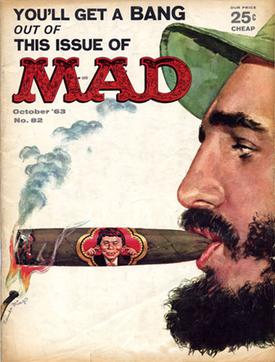
When I saw an early version of the story this morning my immediate reaction was to chuckle— in disbelief. The idea of an exploding pager sounded ridiculous... and also a bit quaint. It reminded me of the story that the CIA in the 1960s tried to assassinate Cuban president Fidel Castro with an exploding cigar. It's debatable that attack even occurred. I mean, exploding cigars where a joke decades ago.  I remember seeing ads in the back pages of magazines aimed at kids for mail-order novelties such as exploding cigars, joy buzzers, and spicy bubblegum.

But this attack actually happened. And it's not a novelty toy.

It got me thinking right away: whoever is responsible for this— Lebanon and Iran point their fingers squarely at Israel— put a lot of planning into this. They would have had to compromise the supply chain all the way back to manufacturing. I mean, it's not like standard pagers come preloaded with explosives that a simple computer hacker could trigger. When Hezbollah ordered thousands of pagers some months ago, the responsible party would have had to 1) find out about the order, 2) design an exploding mechanism, and 3) infiltrate/take over the manufacture to insert the explosive and trigger, before 4) the thousands of pagers are shipped. Subsequent reporting says that the pagers were manufactured by a European company licensed by a Taiwanese electronics brand.

BTW, why were thousands of Hezbollah members using pagers? It's reported that back in February the terrorist group's leaders urged its members to stop using cell phones for communication as it believe Israeli intelligence could track their phones. That's also part of why Israel is suspected of responsibility for the exploding pager plot.

Among the casualties were a few members of foreign governments, including Iran's ambassador to Lebanon. Speaking of pointing fingers at who's involved in what.... Of course, it's no mystery to anyone who pays attention to Middle East politics that Iran bankrolls Hezbollah terrorism. It's just an example of someone getting caught with their pants down— I mean, pager in hand.

canyonwalker: Malign spirits in TV attempt to kill viewer (tv)
A week ago I watched the pilot episode of Timeless, a 2016-2018 TV series about time travel. It's a cat-and-mouse type story where two groups have time machines. One is trying to change things the in the past, the other is chasing after them trying to prevent world-altering changes. I already wrote a few thoughts about the pilot in general. Now I'd like to share three thoughts about specifics in the in S1E1, "Hindenburg". Spoilers marked.

1. The "What If?" Game

Early on in the episode we learn the thieves have travel back in time to the day the Hindenburg explosion in 1937. The characters challenge each other— and, by extension, us— to think how history could be different if there was no Hindenburg disaster.

"It could have made Germany stronger going into WWII," Hawk suggested.

"Ennnnh," I objected. "The Hindenburg was a bad design with its hydrogen flotation. A successful demo success would have risked German aeronautics pouring more time and money into a fatally flawed design."

"But a success there could have intimidated the US into staying out of WWII..."

Except the US did stay out of WWII for two years. And when the Japanese thought they could intimidate us by bombing Pearl Harbor and destroying half our Pacific fleet, they miscalculated. Their attack, which did hobble our Pacific fleet, galvanized the country into action. It spurred us to join WWII and, more importantly, awoke us from a long stupor of underdeveloped manufacturing capability.

Ultimately the time-thieves' plan was Spoiler (click to open) )

2. An Oddly Timed Plot Reveal

At the climax of the episode the writers make a plot reveal that seems premature. Spoiler (click to open) )

3. "Killing [them] in the Cradle"

As the three protagonists are discussing what happened before they return to present day, Lucy declares to the other two, Spoiler (click to open) )
canyonwalker: Sullivan, a male golden eagle at UC Davis Raptor Center (Golden Eagle)
Thanksgiving Travelog #6
Washington, DC - Sun, 19 Nov 2023. 2:30pm.

Sunday we visited the Holocaust Memorial Museum in Washington, DC. It's a place that's been on our to-see list for many years that we haven't gotten to for many reasons... including major things like the Coronavirus pandemic causing us to cancel at least one trip to Washington, DC as well as prosaic things such as difficulty getting tickets. Until now. We had tickets for 10am, when the museum opens, and no fixed plans until after the museum's closure this afternoon. It turned out we didn't need all day. We spent 4 hours there, unrushed.

US Holocaust Memorial Museum in Washington DC (Nov 2023)

This visit is not an easy topic to write about. Unlike most museums, which celebrate accomplishments in art, society, or technology, this one commemorates the losses in a very dark chapter in human history. But it also asks us not to look away from what happened— because by looking away we make it easier for those who would deny or minimize what happened, and make it more likely such things will happen again.

Quote from Supreme Allied Commander Dwight Eisenhower at US Holocaust Memorial Museum (Nov 2023)

Speaking of happening again, one thing that struck me over and over in reading about Hitler's consolidation of power in Germany in the 1930s and the way he wielded it, is just how many parallels there are in the US politics of the past 8 years. Or even in the past 8 days.

You think something like this won't/can't happen again? Bub, we're already several steps down the road to it happening again.

. . .

I don't want to make this entry too heavy a political one so I'll skip ahead to one of the last exhibits we visited in the memorial. This is the Hall of Remembrance:

Hall of Remembrance at the Holocaust Memorial Museum (Nov 2023)

In this room is a bit of earth from each of the concentration camps where a total of several million Jewish people were murdered. Small candles on several of the walls are there for visitors to light in remembrance of those slain.

The inscription on the far wall is from the Book of Deuteronomy:

Only guard yourself and guard your soul carefully, lest you forget the things your eyes saw, and lest these things depart your heart all the days of your life. And you shall make them known to your children and your children's children.


canyonwalker: Sullivan, a male golden eagle at UC Davis Raptor Center (Golden Eagle)
Israel has begun its counterattack against Hamas forces in the Gaza Strip. It follows Hamas's shocking raids on Oct 7 which killed over 1,000 people (figure updated with latest estimates), most of whom were civilians deliberately targeted at a music festival and in their own homes. Unfortunately for Israel, this war is a no-win proposition.

First, not striking back at Hamas is not an option. The Oct. 7 attack was big enough, brazen enough, and barbaric enough that it cannot go unanswered. Moreover, the scope of attack revealed that Hamas has built considerable terrorist war-fighting capability in the Gaza Strip. They have several thousand trained fighters, ample munitions, sophisticated leadership and operational expertise, and training grounds. Israel cannot simply leave this hostile military within its borders untouched.

Clearly Israel must act, militarily. The problem, then, is what degree of success can it achieve by striking back. And that's where it seems there's no reasonable definition of a "win" they can achieve. Consider:

  1. Those thousands of terrorist fighters are not going wear uniforms or guard terrorist bases. They will melt in with the general population. (That's a core fact of terrorism and asymmetric warfare.) Likely many of them were among the first refugees to flee south when Israel warned that it would invade the northern part of the Gaza Strip.

  2. The invasion is hugely damaging to civilians and civilian infrastructure. Israel cut off power and supplies to the Gaza Strip two weeks ago. That's part of isolating and disempowering the terrorists... but it's also created a humanitarian crisis with 1,000,000+ civilian victims.

  3. In addition to the general problem of civilian harm when fighting a war in a densely occupied area, Israel must deal with the fact Hamas hides its war materiel in civilian infrastructure. Past strikes have reveals that guns are stored in hospitals, bombs are kept in schools, and officers meet to make war plans in occupied residential buildings. Thus neutralizing Hamas's war-making capability will mean these places are targets. That not only makes the humanitarian impact worse but will play terribly in the news.

Sadly Israel will find its loses international support the longer it pursues this war.
canyonwalker: Sullivan, a male golden eagle at UC Davis Raptor Center (Golden Eagle)
One week ago Israel was viciously attacked by the terrorist group Hamas, which is also de facto government of the Gaza Strip. Hamas fighters purposefully massacred hundreds of civilians in addition to waging attacks on military targets. Soon thereafter I started seeing the analogy in the news, "10/7 is Israel's 9/11." I was already thinking it myself.

I've also seen some articles where writers highhandedly admonish readers how 10/7 and 9/11 are not alike, because of how al Qaeda was a non-state actor and Hamas is a state actor, or some equally beside-the-point thing like that. There are two big problems with this. First, fuck the finger-wagging man-splaining. Anyone attempting to use asshole style arguments and rub my nose in how smart they are by explaining to me how I've been mistaken the whole time is rarely going to win points with me. Rarely, because it's rarely the case such people are actually right! I will agree with an asshole's point if they are right. But almost invariably assholes are not right, because they are too caught up in their own egos to recognize facts contrary to their prejudices. In this case these finger-waggers are wrong because of problem #2: All analogies fail when you take them too far.

The point of making an analogy is to illustrate how something unfamiliar or simply new, in this case the 10/7 attacks on Israel, is similar in a few keys respects to something much more familiar, like the 9/11 attacks on the US. The key is in a few key respects. An analogy will always— always— break down if you take it too far. The "take it too far" in the case of these contrarian writers is them comparing the different geopolitical positions of Hamas vs. Al Qaeda and arguing that because those two are not the identical the whole comparison is null and void. That's horseshit. Their argument is a logical fallacy (overextending an analogy proves nothing) and an indication of arguing in bad faith.

The point of the analogy between the attacks is not that Hamas and Al Qaeda are the same (except also in some limited regards) but that the impact and consequences of the attacks have, or are likely to have, key similarities. Here are three big similarities I can think of right off the top of my head:

1) The attack killed a huge number of people, proportionately. The 9/11 attacks in the US killed just under 3,000 people, virtually all civilians. The initial death toll in the attacks on Israel was estimated at just over 100 in the hours after the attack. Just that death toll is a comparable loss as the US population in 2001 of 285 million is 30x Israel's population of 9.3 million today. And as the breathtaking scope of the 10/7 attacks became clearer after the first few hours, the death toll increased to over 900. Edit: after several days it was increased to 1,400. That makes 10/7 actually fourteen times as bad as 9/11 in terms of proportionate loss of life.

2) Policy reaction to the attacks will change government and society. The US government implemented sweeping, permanent changes after 9/11. The changes are still all around us in our daily lives. In Israel, this attack is seen as a massive failure of the country's sophisticated and far-reaching intelligence apparatus. What changes in surveillance and security policies will be made? And will this attack ultimately topple the precarious government of Prime Minister Benjamin Netanyahu? Israelis are understandably pulling together in this time of war, but at the same time many are openly criticizing the leadership of Netanyahu— who for years has defined his political brand as his ability to keep Israelis safe from attack better than absolutely anyone else.

3) Israel has a rare moment of global support— and may overplay it. Following 9/11 the US had broad international support, including from geopolitical rivals who'd ordinarily condemn US foreign actions, to find and bring to justice the parties responsible. This support backed the invasion of Afghanistan and tolerated, to a certain extent, broad suspicion of Muslim people and Muslim majority countries. The US overplayed its hand, though, in invading Iraq under flimsy pretenses that later proved false— arguably knowingly false— and in violating its own commitments to the international rules of law through actions such as detaining prisoners without charges or trial and using torture. Nevermind that the US's enemies did such things as a matter of course; the US was held by its peers and its own people to a higher standard. Israel faces the same challenge today. This attack was brutal. It violated the rules of war, via its deliberate attack on civilians and taking of hostages. But Israel will lose its moment of international support if it does the same in return. It may seem unfair that it's held to a higher standard, but it's simply a fact that it is. And already its war on Hamas is causing a widespread humanitarian crisis. The 2 million residents of the Gaza Strip have been without power or piped water for several days. Israel is telling 1 million of them to leave ahead of a ground invasion, but where will they go? The borders, including Egypt's border, are all closed.
canyonwalker: Sullivan, a male golden eagle at UC Davis Raptor Center (Golden Eagle)
On Saturday Hamas, the Palestinian militant group that controls the Gaza Strip, launched significant attacks against Israeli military and civilian targets. They fired hundreds if not thousands of rockets while soldiers attacked several military bases. In the initial round of the attack more than 100 900 Israelis were killed, hundreds more wounded, and many over 100 hostages were taken— both military personnel and civilians mostly civilians, whom Hamas deliberately slaughtered. As fighting continued Saturday and into its second day on Sunday, Israel declared war.

One of the first questions people ask is, "What started this war?" Well, there are different answers one could give to that depending on whether one looks back 2 years, 20 years, 75 years (specifically to 1948), or 1,000 years. Oddly Hamas itself gave an answer that looked back a mere few days: Israelis had defiled the very holy Al-Aqsa Mosque in Jerusalem. That's what news headlines on Saturday morning repeated.

Let me continue, for the moment, with the argument that the attacks were in response to damaging a holy site. That prompts two questions: 1) You expect me to believe that? An attack of this magnitude clearly was months in the planning. There's no way it was cooked up in two days in response. 2) How was the holy site defiled? A bit of digging beneath the headlines on Saturday morning revealed this ruse for what it is. The defilement was that a few Israelis prayed in the temple. Obviously they were being provocative by doing that but all they did was pray. Though that's obviously not the true cause of Hamas's acts of war on Israel, just think about whether any reasonable person would want to support the side that presents as its justification for war, "Someone prayed to the wrong god, so we killed over 100 900 people and took hostages."

Now, anyone who wasn't proverbially born yesterday, or at least anyone who can grasp that history goes back more than about a week, will spot that Hamas's attack occurred on nearly the 50th anniversary (50 years plus 1 day) of the Yom Kippur War. Likely that's what Hamas was aligning the timing of its attack to.

As for why now, one could look merely at the worsening Israeli-Palestine situation over the past several years and assume things simply came to a head. The increasingly hardline political rule in Israel under PM Netanyahu has made things tough for Palestinians. But there are also significant things afoot outside the borders of Israel and Palestine that affect the situation.

In recent years some Arab countries have normalized political (and economic) relations with Israel. Following the Abraham Accords in 2020-2021, Bahrain, the United Arab Emirates, Morocco, and Sudan normalized ties with Israel. Lately Saudi Arabia has been moving to do the same. If the Middle Eastern economic powerhouse— and custodian of several of Islam's holiest sites— Saudi Arabia were to officially eschew "Death to Israel" as its foreign policy, it would remove a lot of fuel from the fire of supporting Palestinian militants. It could even start a domino effect that brings many other Arab nations toward peace with Israel. The smart money is on Hamas attacking now to derail these moves toward peace.

Edited to add:This geopolitical view also explains Iran's alleged involvement. Hamas's multi-pronged attack indicates a near certainty of external funding and organizational support. Iran has long been involved in propping up Hamas, along with other anti-Israel/anti-secular-rule terror groups. Iran also benefits from derailing rapprochement between Saudi Arabia and Israel. Iran's economy is failing due to a combination of its own corruption and the weight of US sanctions. It would be further left behind if its rival, Saudi Arabia, were to see an economic boost from trading with Israel.

Update 2: Casualty counts from Hamas's initial attack increased in the following days. It's not assessed that their initial attack killed over 900 Israelis, many of them civilians. Hamas deliberately targeted civilians at parties and homes, busting through doors and slaughtering everyone inside. Over 100 hostages were taken, many of them also civilians.


canyonwalker: Sullivan, a male golden eagle at UC Davis Raptor Center (Golden Eagle)
When I visited the Alamo in Texas a few days ago I thought a lot about how to frame what happened there in terms of a larger history. The popular story is about American heroes choosing death over defeat and the enemy's brutality making "Remember the Alamo!" a powerful rallying cry for independence. But independence from what, and why? The way those parts of the story are framed at the Alamo itself raised my skepticism because I could see the tool marks of recent politics on them. Sure, simplified us-versus-them stories are winners with most. But not with me. I wanted to dig deeper.

The Alamo, San Antonio, Texas (May 2023)

One way to frame what happened at the Alamo is as part of a larger independence movement in the US. Of course, Texas wasn't part of the US back then. Texas was a state in Mexico, which had won independence from Spain in 1821. But a good many of the settlers of Texas were from the United States. In fact Mexico encouraged Americans to come settle in Texas. Arguably one of the lessons is that Mexico should've known better than to invite Americans in; they'd revolt and demand independence. 😂

Politically Mexico was a mess back then. The following independence were rocky, politically, as different schools of thought and different factions collided over how to structure the national government. Some wanted a decentralized government, similar to the confederacy of the US under the Articles of Confederation that preceded the US Constitution. Others wanted a strong centralized government. And others proclaimed a third way, balancing the first two.

The 1824 Constitution of Mexico had created a federal system in which many rights were devolved to states. But over the years the central government asserted more power, including passing anti-American laws that limited immigration from the US and taxed US imports heavily. These were unpopular with the influential Anglo-American population in Texas. Mexico officially abolished slavery in 1829. That, too, pissed off the American immigrants as most of them were from the American South, where slavery remained legal, and had brought their slaves— and their view of slavery as the natural condition for Black people— with them. The final straw came in 1835 when the new president (there had been several in just a few years), Antonio López de Santa Anna suspended the constitution, replacing it with a series of articles that gave him strong, centralized power. Texas revolted, as did many other states.

One fair question is if many states revolted, why was there only fighting in Texas? One answer is that Texas was more revolting. Texian soldiers sacked some Mexican outposts, infuriating Santa Anna. In addition, Santa Anna believed the US was orchestrating the revolt against his power. He led his army to Texas to punish the American ex-pats there. Ultimately, though, when Santa Anna was defeated, no other states demanded independence, only Texas.

canyonwalker: My other car is a pair of hiking boots (in beauty I walk)
Saturday we headed north toward San Francisco to visit some friends in Pacifica. Afterwards, instead of driving back home, we continued north through San Francisco on 19th Ave. across the Golden Gate Bridge. We'd planned to make a little weekend out of it, staying north of the bridge in Marin County for the night so we could hike a bunch of waterfalls in the area on Sunday. That plan left Saturday late afternoon open... and we filled it with a visit to Hawk Hill.

"Hawk Hill?" you might ask. "What's that?"

You may not know the name but I'm pretty sure you've seen it... or rather you've seen the view from atop it.

View of the Golden Gate and San Francisco from Hawk Hill (Apr 2023)

It's a classic vista of San Francisco and the Golden Gate. In the distance you can also see Alcatraz, Angel Island, Treasure Island, the Bay Bridge, and Oakland.

If you're wondering why the name Hawk Hill, it's because it's a great place for seeing migrating birds in Autumn. We've been there a bunch of times in the past for hawk-spotting. They even have ranger presentations about hawk on the weekend. Those "hawk talks" are always fun because a ranger shows a live bird they've temporarily captured for tagging.

Anyway, there were no birds on this slight brisk spring day, unless you count crows, but there were other things that Hawk Hill is known for.

WWII era battlements atop Hawk Hill (Apr 2023)

Before it was called Hawk Hill it had some really stupid, dull government name like Hill 789. But it was an important hill because of its view out across the Golden Gate, and important navy port for Spain, then Mexico, then the United States. Starting with the Gold Rush after 1849 San Francisco also became a huge commercial port. In WWII it was the primary port on the West Coast for shipping men and materiel across the Pacific.

To defend the area against the naval attack the US government built a number of fortifications into Hawk Hill and other hills around the mouth of the Golden Gate. The picture above shows the remains of a large cannon battlement. The cannon was placed on a huge swivel in that round depression at the front of that concrete bunker. The concrete surrounds protected it from attack by aerial bombardment. Behind the gun area you can see a corridor going all the way through the top of the mountain. That aided soldiers moving between positions. Chambers to either side of the corridor, buried beneath meters of natural rock, stored ammunition.

The guns in these fortifications were never fired in battle. They were decommissioned some time after WWII.

View of the Golden Gate Bridge and San Francisco from Hawk Hill (Apr 2023)

Hawk Hill isn't just a hill but part of a mountain ridge. A road winds along the face of it with views at every turn. Lower down on the hill there's another area with WWII era fortifications. I didn't really take any pictures of the military remnants on this visit. They're in decrepit shape and covered with graffiti anyway. But here's another great vista of the Golden Gate Bridge and San Francisco! And BTW there is a WWII battlement in the pic.... Notice that concrete platform at the lower left. I believe it's the base for a WWII anti-aircraft gun.


canyonwalker: Sullivan, a male golden eagle at UC Davis Raptor Center (Golden Eagle)
Turkey today ratified Finland's petition to join NATO. The vote in Turkish parliament, which was hardly a sure thing, now goes to president Tayyip Erdogan, who has signaled he will sign it. Erdogan's approval was also hardly a sure thing. He demanded, and won, a few concessions from Finland as a condition of the vote. Turkey is the last of 30 NATO member countries to approve Finland's petition. Finland may officially be inducted at the next NATO member meeting in July. Example news coverage: Reuters article 30 Mar 2023.

This may sound like wonky, unimportant international news, so let me put it in context. It's about Russia's invasion of Ukraine.


  1. One of Russia's stated goals for invading Ukraine was to prevent a country on its border (i.e., Ukraine) from joining NATO.

  2. Russia's invasion prompted more countries to want to join Russia; principally Sweden and Finland.

  3. Finland joining NATO greatly increases the Russia's border with NATO members. See map below.

  4. Own goal: Russia.


Russia's Invasion of Ukraine Pushes More Nations to Join NATO (map adapted from BBC image)

Prior to Russia's invasion in 2022 the country had very little border with NATO states. There was a bit with Estonia and Latvia. Counting in Kaliningrad, it shares a bit of border with Lithuania and Poland. And if you consider Belarus basically part of Russia (it has basically a sock-puppet government) it has more border with Lithuania and Poland.

One of Russia's stated goals/justifications for invading Ukraine in 2022 was to limit its border with NATO. Russia contended (i) Ukraine was going to join NATO, (ii) NATO represents a military threat to Russia, and therefore (iii) it had to annex Ukraine to keep NATO further away.

Claim (i) was false. Ukraine did not want to join NATO— though it started talking about it more seriously as Russia built up for the invasion. Claim (iii) is ridiculous logic as if Russia did annex Ukraine it would add borders with NATO member states Romania, Hungary, Slovakia, and Poland.

...Not that any of this would justify invasion even if it were true, but it didn't even make sense. And now Russia has achieved the opposite of its stated goal. Finland and Sweden, which were content being outside of NATO prior to 2022, petitioned to join. Now with Finland's membership imminent (Sweden's is still blocked on approval from Turkey) there soon will be hundreds of new miles of NATO member countries on Russia's border. Russia's aggression provoked the opposite of one of its stated goals.


canyonwalker: Sullivan, a male golden eagle at UC Davis Raptor Center (Golden Eagle)
Last week I finished watching The Pacific with episode 10, "Home". As episode 9 ended with soldiers on Okinawa hearing about an atomic bomb dropped on Japan, the combat is all over. This episode traces the stories of the viewpoint characters as they return home.

Eugene Sledge, Bob Leckie, and some of their immediate cohort don't return home until months after the conclusion of the war. The series doesn't address why this happened, just that it was. A viewer who didn't know otherwise may think it was just because it took months to demobilize and transport some of the men home. I know otherwise from family stories about my Great-uncle John, who served in the Pacific and fought in some of those horribly brutal battles.

"...Plus 6 Months"

Soldiers like John arrived home 6 months later not because, oops! their ship across the Pacific got lost and had to stop for directions or somesuch. The military held some of the soldiers on bases for a few months before allowing them to return home. In the months-long battles in places like Okinawa, Iwo Jima, and Peleliu the soldiers lived like savage animals. The base duty was for reintegration. They'd get re-accustomed to getting showers and hot meals, putting on clean clothes every day, not jumping out of bed and grabbing their rifle whenever something went bump in the middle of the night, etc.

Curiously the show addressed the legal basis on which this reintegration assignment rested with mentioning the reassignment itself. When soldiers enlisted or were drafted their term of service was "The war plus 6 months." Presumably that "plus 6 months" bit was added in case new hostilities flared up after the end of the war or military resources were required for rebuilding.

It was First Lady Eleanor Roosevelt's idea, my grandma (John's sister) and my dad told me, to use the "plus 6 months" term to help transition soldiers who saw the worst back to civil society. My family also tells me that John hated it. He just wanted to be back with his mama sooner. 😅 Friends of mine I've shared this story with who are family of soldiers who served in Iraq and Afghanistan told me they wished such a thing was done for their loved ones.

But back to the show and its story....

Some Swing Quickly into Post-War Life...

Sledge and Leckie are among those who arrive home later than most other soldiers. Leckie is a character I thought might struggle with returning to civilian life. Instead he walks back into the newspaper office where he used to work and demands his old job back, plus a raise. He makes the case with such clarity and confidence the editor agrees.

Leckie does mope a bit when he sees that his sweetheart, the across-the-street neighbor Vera who barely ever gave him the time of day that he wrote lots of letters to while fighting the war, is dating another soldier already. "He's an officer!" Leckie's mom her oh-so-helpfully points out. "And look at the size of his car!"

Leckie takes charge in that situation, too, going across the street to ask her on a date. Vera's mom is just as standoffish as Vera. "And whom shall I say is here?" she asks. "I'm Bob Leckie, the kid who's lived across the street from you for 20 years."

Leckie stands undaunted by her frosty reception. He's also undaunted by the arrival of the other soldier, the officer, who already has a date with Vera that evening. The officer tells Leckie to get lost. Instead Leckie is like, "How about tomorrow night, Vera?" The officer, a young 2nd lieutenant commissioned only after the end of the war, throws a snit fit, insults Vera, and leaves. Leckie takes her out for dinner. Crawl text at the end of the episode tells us they married and lived happily for many years.

...Some Struggle to Get On with Life

Eugene Sledge returns home to Mobile, AL to find his best friend, Sydney Phillips, already enthusiastically adjusted to post-war life. Sydney, who was discharged quickly is already engaged. To Sledge's amazement it's to a woman all the young men in town had considered the most eligible bachelorette.

Sledge, meanwhile, struggles to find his direction. He's not interested in the young adults' party scene, even though it's plenty active with all the young men home from war and the women eager to be courted again. Sydney encourages Sledge to put on his uniform and meet people, telling him his combat experience will make him more attractive in the dating scene than those who "flew a desk." But Sledge doesn't want to wear his uniform ever again or talk about it. He wears a nice suit and tie instead. And when people ask him about his service he says clumsy, off-putting things. The reason he doesn't want to talk about it is it hurts.

Sledge suffers even at home. His family has money and a nice house, his father being a doctor. So he's not under pressure to get a job to support himself. ...Which is good, because he suffers from things like night terrors. In one scene he's tossing in bed screaming while still asleep. His father, the doctor, sits quietly outside his door.

In another scene, Sledge is lounging under a tree in the yard when his mother comes out and criticizes him for being an idler. Sledge gives her a blank stare. His dad admonishes her to go easy on him. The reason for this gender role reversal, nurturing dad and get-off-your-lazy-ass mom, is hinted at in a scene several episodes earlier. Sledge explained to his squad mates that his dad is a doctor who treated soldiers returning from WWI. He saw the horrors of war and how they stuck with young men. That also casts a different light on his efforts to stop Eugene from enlisting in the first episode.

Sledge is the character who most makes me think of my great-uncle John. John never wanted to talk about the war or his service, never wore his uniform again even in situations where it would've been advantageous to, and took a while to find his direction after the war. Eventually John took a job with a big insurance company whose headquarters were in the nearby city. He worked there until the day he retired. Sledge, the series tells us, went to college, earned a Ph.D. in microbiology, and spent his career teaching. Oh, and Sydney Phillips earned an M.D. and worked as a doctor in the community.

canyonwalker: Sullivan, a male golden eagle at UC Davis Raptor Center (Golden Eagle)
Episode 9 of The Pacific, "Okinawa", follows very much in the footsteps of the previous episode, "Iwo Jima". Historically the two campaigns were pretty much one right after the other. Each entailed weeks of pitched battles.

Brutal combat has been the norm across this series. In Okinawa it reaches a new level of brutality. American soldiers are shocked and dismayed to see Japanese soldiers using the local civilian population as human shields... and worse, as human bombs.

Eugene Sledge is the main viewpoint character in this episode. Sledge, previously the mild mannered new recruit from a genteel family in Mobile, Alabama is now the grizzled combat veteran showing the newer recruits how to survive in brutal combat. The new level of brutality really gets to him, though; particularly seeing civilians exploited as human shields.

The episode ends about 6 weeks after the Battle of Okinawa is concluded. The Marines still on the island are climbing up on trucks to be sent somewhere else. An officer tells them, "They dropped some new kind of bomb" that destroyed an entire city. That would be the atomic bomb dropped on Hiroshima, Japan on August 6, 1945.

BTW, some historians hold that the brutality of combat, and the Japanese Army ethos never to surrender, seen on Okinawa influenced American military leaders to drop the bombs. Prior to those bombs the plan had been to use Okinawa's harbor and airfield as an critical launching point for an assault on the Island of Japan that would involve 3,000,000 US soldiers.


Profile

canyonwalker: wiseguy (Default)
canyonwalker

February 2026

S M T W T F S
1 2 3 4 5 6 7
8 9 10 11 12 13 14
15 16 17 18 19 2021
22232425262728

Syndicate

RSS Atom

Most Popular Tags

Style Credit

Expand Cut Tags

No cut tags
Page generated Feb. 23rd, 2026 03:44 am
Powered by Dreamwidth Studios